Skip to content
Holidays
Candle Lighting Times
Shabbat
Tisha B’av
Tu B'av
Juneteenth (US)
More Holidays >>
Every Day
Blessings
Daily Living
Home
Kashrut
Prayer
Ritual and Prayer Items
Spirituality
Tzedakah
Living
Climate and Environment
Health
Jewish Identity and Pride
LGBTQ+
Lifecycles
Social Justice
Travel
Learning
Tanakh
Torah (The Five Books)
Neviim (Prophets)
Ketuvim (Writings)
Tanakh Yomi
Conservative Judaism
Halakhah
Inclusion
Mitzvot
Community
Make Connections
EJ Writers Fellowship
JTS Senior Sermons
Ziegler School Senior Sermons
Ask a Rabbi
Mini-Shop
About
About Us
Our Team
Authors
Pitch a Piece
Feedback
Exploring Judaism Blog
Search
Donate
Search
Category: Passover Reflections
Dayenu: A Passover Message
This Passover, and beyond, may we have the blessing of adding a few more verses of Dayenu for the miracles in our lives, and our ...
Rabbi Jacob Blumenthal
April 10, 2025
Holidays
October 7th and Israel-Hamas War
Partial Deliverance is Still a Blessing
Dayenu reminds us to appreciate the steps toward redemption, and we must continue taking small but meaningful steps too.
Ophir Filhart
April 6, 2025
Holidays
October 7th and Israel-Hamas War
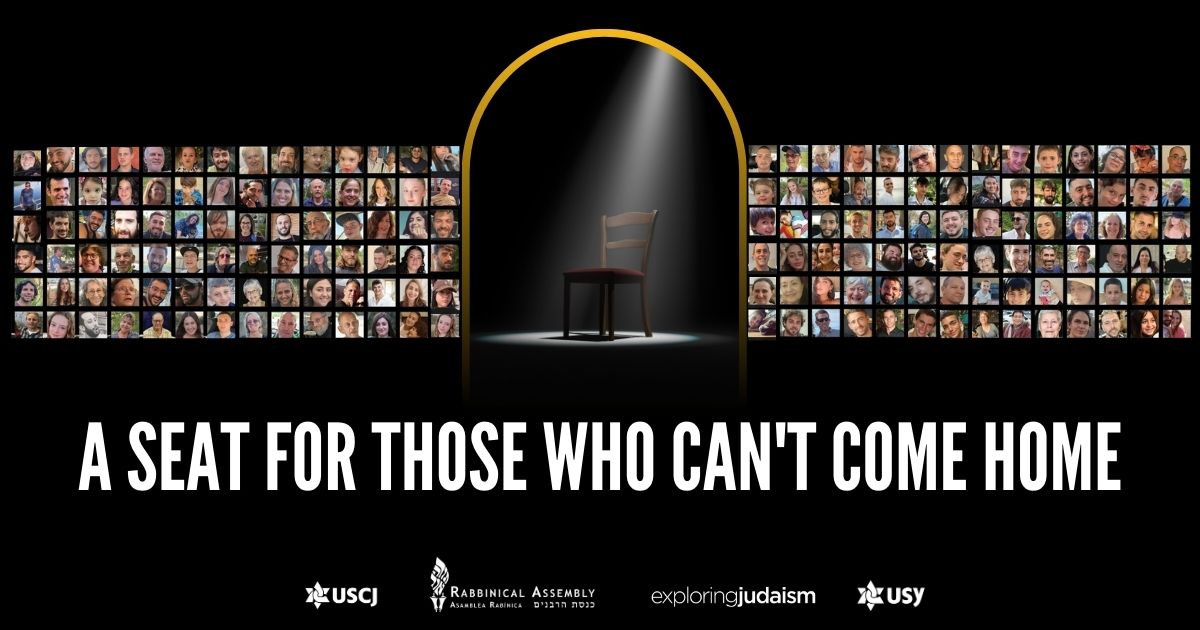
A Seat For Those Who Can’t Come Home
This year, as we prepare the seder, we encourage an extra setting at your table—an empty chair for our family still in captivity in Gaza.
Rabbinical Assembly
April 15, 2024
October 7th and Israel-Hamas War
Passover
Reparations: The Difficulty and Bravery of Asking
Look at reparations and the difficulty and bravery of asking, through the lens of slavery in Egypt, slavery in America, and the Holocaust.
Rabbi-Cantor Michael McCloskey
April 5, 2024
Holidays
Passover
The Secrets of Matzah
There are so many secrets hidden away within Matzah that ask to be uncovered, offering us spiritual wisdom.
Rabbi Mordechai Rackover
March 27, 2024
Holidays
Passover
Every Year We Must See Ourselves As If We Were There
Every year at Passover, we must see ourselves as If we were there in Egypt and take on what that means for ourselves.
Rabbi Amy Eilberg
March 27, 2024
Holidays
Passover
B’khol Dor Vador—In Every Generation
What does "b'khol dor vador—in every generation" mean in light of the events of October 7? How does this connect us to Passover?
Rabbi Jacob Blumenthal
March 27, 2024
Holidays
Passover
Why Couldn’t Moses Enter the Promised Land?
Current events help us understand why Moses couldn't enter the Promised Land and remind us the importance of innocent lives.
Rav Shai Cherry
March 27, 2024
Holidays
Passover
How a Show Like “Succession” Illuminates the Four Children
How can a show like "Succession" illuminate the Seder? Compare the Four Children of our haggadah with the four Roy children.
Rabbi Adam J. Rosenbaum
March 27, 2024
Holidays
Passover
On Passover, We Are All Jews-By-Choice
On Passover, we are all Jews-by-Choice when we choose to remember what it is that brings us together for the holiday.
Andi Kahclamat
March 27, 2024
Conversion
Holidays
Slavery, Social Justice, and Family History
Reflecting on a "Pilgrimage to the South" on a Movement social justice trip as a Black Jew and how it has changed who I am.
Rabbi Heather Miller
March 27, 2024
Holidays
Passover
The Seder as a Lived Experience
We use the Seder as a lived experience by reenacting the exodus, not just recounting it. Therefore, we can all connect to Passover.
Rabbi Lauren Tuchman
March 27, 2024
Holidays
Passover
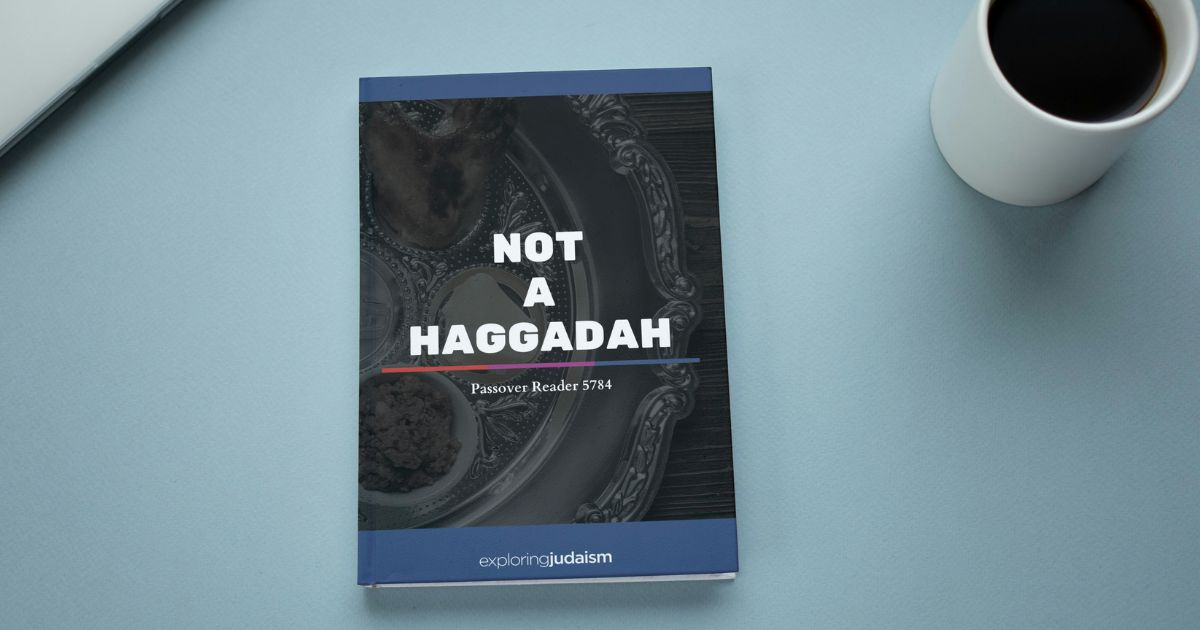
Passover Reader 5784: Not A Haggadah
Exploring Judaism's 2024 (5784) Passover Reader, Not A Haggadah, includes essays to inspire a meaningful Passover.
Exploring Judaism
February 25, 2024
Holidays
How to observe Passover
This is the Bread of Affliction
This is the bread of affliction: Matzah adorns our Seder plates and nourishes our souls, as well—this food is fulfilling.
Rabbi Mark Asher Goodman
December 26, 2023
Food
Holidays
Yachatz: Brokenness and Wholeness
One explanation offered by the Sages for Yachatz in the seder is that it helps promote making the world less broken, if not completely whole.
Rabbi Dr. J.B. Sacks
April 3, 2023
Holidays
Passover
Climate Disruption and Passover
Let’s do more than remember our refugee origin story and include how climate change and disruption are leading to new refugees.
Yaira Robinson
April 3, 2023
Climate and Environment
Climate change
Mujaddara on Passover
How my family created and passed down cultural traditions, and how the Conservative Teshuvah on Kitniyot impacts our life outside the academy.
Emily Jaeger
March 19, 2023
Food
Halakhah
Why Is Diversity Important at the Passover Seder?
This is why I think my family's tradition of inviting a non-Jew each year to the Passover seder is important.
Emily Jaeger
March 19, 2023
Holidays
How to observe Passover
The Important Thing That Keeps our Family “Doing Jewish”
The most important thing to teach the next generation is how to make a seder, including what comes before the festival candles are even lit.
Atty Garfinkel-Berry
April 13, 2022
Food
Passover
When the COVID Plague Threatens Your Seder (Again)
Here are 10 tips on how to make Pesah meaningful and kosher (enough) even when the plague of COVID continues to threaten our celebrations.
Rabbi Ilana C. Garber
April 13, 2022
Passover
Passover Reflections
The Four Children and Racial Justice
We approach the Haggadah at a time of profound racial reckoning in our country. How might the four children help us relate to racial justice?
Rabbi Amy Eilberg
April 6, 2022
Passover
Passover Reflections
Mah Nishtanah: How Is This Moment Different?
Mah Nishtanah: How is This Moment Different by Rabbi Rachel Ain is a reflection on her recent trip to Ukraine in 2022.
Rabbi Rachel Ain
April 6, 2022
Passover
Passover Reflections
Leveraging Anger for Change this Passover
While anger and frustration can lead to stress and dissatisfaction, mindful approaches to our anger can move our lives out of complacency.
Rabbi Dahlia Bernstein
April 3, 2022
Passover
Passover Reflections
Ask the Questions and Dig Deeper
Combining lessons from the Mishnah and Human Resources, we realize that asking questions is the path to greater understanding.
Chaim H. Respes
April 3, 2022
Passover
Passover Reflections
The Four Questions and Living with Mental Illness
We have the opportunity to help teens create long-lasting positive connections to the very traditions they are appropriately questioning.
Risa Finkelstein Sugarman
March 31, 2022
Health
Illness
Freedom and Food Allergies
How is one with food allergies supposed to feel free when they can’t partake in the matzo balls, charoset, cake, or anything else?
Rachel Packer
March 29, 2022
Food
Health
Including non-Jewish guests at our Seder: A reflection
Reflecting on the universal nature of the Exodus, as "eternally contemporary; it’s the story of too many peoples."
Rabbi Jonathan Wittenberg
March 29, 2022
Passover
Passover Reflections