How does it feel to celebrate Hanukkah in Israel?
I have lived in Israel for 10 years. One of the aspects I cherish most is experiencing the chaguim in a more immersive way. Here, our traditions are not just synagogue events, but integrated into daily life.
Every chag has its own special taste in Israel.
- On Yom Kippur the whole country stops. Cars vanish from the highways, replaced by people dressed in white walking to the synagogue. Children ride their bicycles down the center of the road.
- It is not weird to see the bus driver dressed up as a zombie on Purim.
- And on Yom HaAtzmaut you can smell the barbecues in every corner.
When winter arrives here in Israel and the nights get longer, we all know which chag is coming: Hanukkah. The excitement is palpable—from the children eagerly anticipating the weeklong school vacation, to adults stocking up on hanukkiot and candles.
Join me to explore my three favorite Hanukkah experiences that are especially magical—and uniquely Israeli.
Siba LeMesiba (reason to party): Lighting Hanukkah candles with your family, friends and colleagues.
Your grandmother’s cousin, your friend from the army, or the coworker who sits next to you. Everybody is going to invite you to a candle lighting event on one of the nights of Hanukkah.
This is definitely one of the perks of this chag lasting a whole week. We can make time to go to all these gatherings. And don’t expect a small ritual moment—it is the exact opposite. These gatherings most probably will include more than enough food, drinks, and of course hanukkiah lighting and Hanukkah songs.
So, if you want to avoid a classic fadicha (an embarrassing moment)—practice all of Maoz Tzur beforehand!
Public events that take place at sundown usually pause as well. Basketball games, concerts, or even weddings will stop for 10 minutes to light the hanukkiah.
This is Hanukkah in Israel: the miracle of light, woven naturally into our lives.
Window Hanukkiah Tour in Jerusalem
One of the main mitzvot of Hanukkah is pirsum hanes, publicizing the miracle. It’s our responsibility to share the story of the Maccabees and their war against the Seleucids, as well as the miracle of the oil that lasted eight days.
In Jerusalem, families place their hanukkiot facing passersby—in windowsills, or even in special niches in the streets. As you walk through the city’s narrow alleys, you see thousands of small flames illuminating the darkness. It’s a picturesque and magical atmosphere that fills the air with inspiration and awe.
To see and feel this wonderful sight, thousands of Israelis join guided tours. They stroll through the neighborhoods where this living tapestry of light fills the streets.
Sufganiyot Extravaganza
We cannot talk about a Jewish holiday without talking about the food. And in Israel, Hanukkah food culture is legendary.
While potato latkes are a delicious treat, the most iconic food of Hanukkah is without any doubt the sufganiya—the fried, jelly-filled Jewish doughnut. It absorbs oil, asits name implies (“sfog” in Hebrew means “absorb”), reminding us of the miracle of the oil. Some Moroccan Jews eat a similar fried doughnut known as sfinge. In Israel, you can start seeing the first batches of sufganiyot on bakeries’ shelves as early as October—as soon as the sukkah comes down.
In the last couple of years, both the presentation and the range of fillings have expanded in an impressive way. From microbakeries to famous coffee chains and restaurants, many use this chag to express their creativity through this small stuffed ball of fried dough.
Although my preferred filling is by far dulce de leche, the vast majority of Israelis share an opinion. They will affirm that the king of all fillings is the simplest strawberry jam sufganiya.
You can find 1 shekel sufganiya in the big supermarkets. But it’s possible to spend 20 shekels or higher in artisanal bakeries like Kadosh or Roladin.
Hanukkah in Israel: Sharing the Light
As Hanukkah approaches, remember to gather your family, friends, and neighbors. Celebrate this joyful and iconic chag through sharing the miracle. Show the world the light of the Hanukkiah, spin the sevivon/dreidl, and enjoy tons of fried latkes and sufganiyot.
And if you have the privilege to celebrate Hanukkah in the land where the story of bravery and miracle actually happened—the land where the dreidls say “A Great Miracle Happened Here”—expect to feel the chag in the air and in the streets. Prepare to take part in various candle lighting events. Schedule a guided tour through the alleys of Jerusalem to see the many hanukkiot that light up the streets. Sample sufganiyot in every flavor under the sun.
Hanukkah in Israel is more than just a holiday. It’s a communal vision of hope. It’s a reminder that even in the darkest nights, we can spread light.
חג אורים שמח
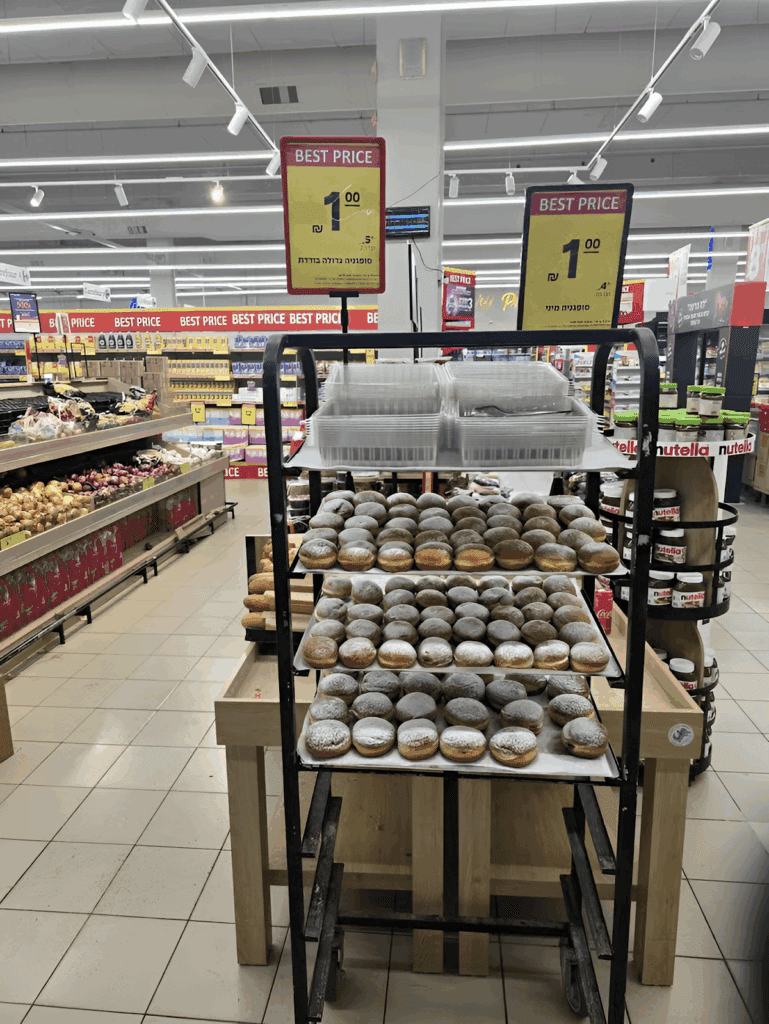
Image: Ynet
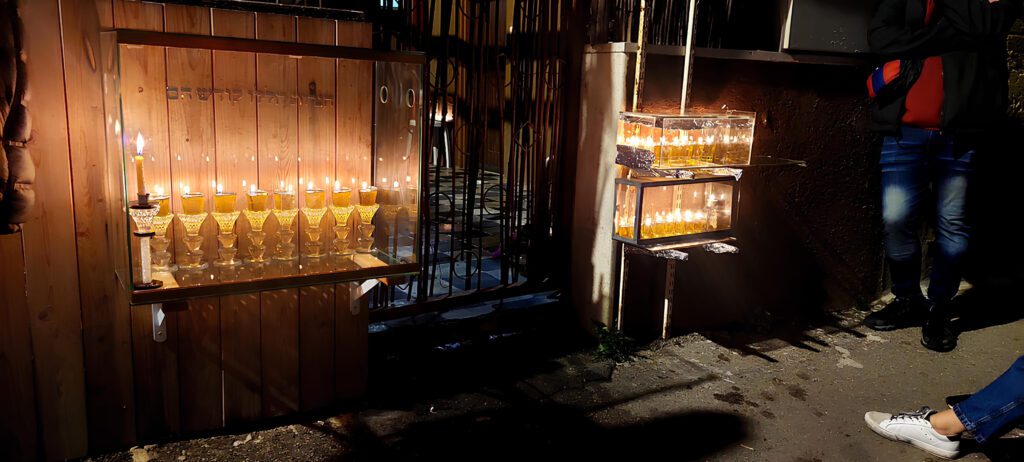
Image: Andre Wajnberg