If any of the festivals, generally referring to Passover, Sukkot, and Shavuot, fall on a Thursday and Friday, when may one cook for Shabbat?
Under normal holiday circumstances, throughout the year, one is only permitted to cook on festival days to make food for the holiday itself, not for any day beyond that.
We make an exception to this rule when the next day is Shabbat.
We do this by creating a legal fiction called eiruv tavshilin (also spelled eruv tavshilin). We “begin” cooking for Shabbat before the onset of the festival and then merely “continue” with our already-begun Shabbat preparations during the course of the ensuing festival.
While this may seem peculiar, it is actually a wonderful way both to maintain the integrity of the system while at the same time allowing for the kind of reasonable flexibility that will only enhance the joy of celebrating these special days.
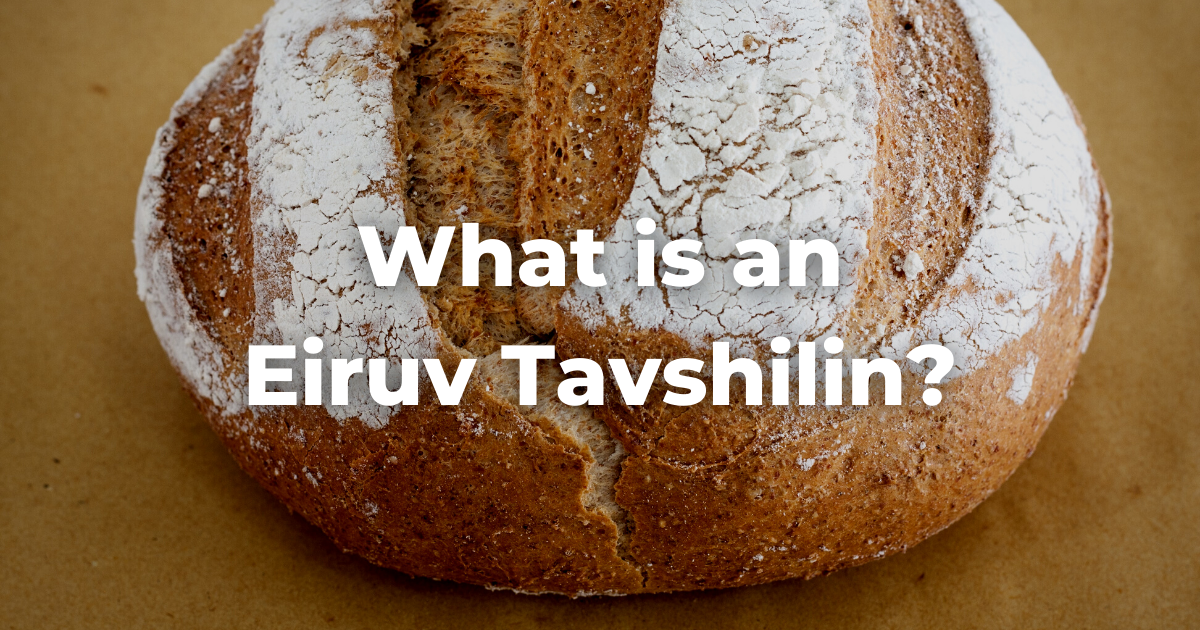
To make an eiruv tavshilin, one must place two cooked items (for example, a roll or a slice of bread [or, on Passover, a sheet of matzah] and a cooked or roasted dish, like a piece of meat or fish) on a plate and then recite a blessing.
This blessing, found in any standard prayerbook and in the Haggadah, is the regular blessing for the performance of commandments and ends with the words al mitzvat eiruv (by commanding us regarding the eiruv).
בָּרוּךְ אַתָּה ה׳ אֱלֹהֵֽינוּ מֶֽלֶךְ הָעוֹלָם אֲשֶׁר קִדְּ֒שָֽׁנוּ בְּמִצְוֹתָיו וְצִוָּֽנוּ עַל מִצְוַת עֵירוּב:
Barukh atah adonai, eloheinu melekh haolam, asher kidshanu b’mitzvotav vitzivanu al mitzvah eiruv.
Praised are you, Adonai, our God, master of the universe, who makes us holy and commands us with God’s commandments upon the mitzvah of eiruv.
One must then recite an additional declaration, to enact the ritual: “By means of this eiruv, we are permitted to bake, cook, warm, kindle lights, and make all the necessary preparations during the festival for Shabbat, we and all who live in this place.”
Ideally, this food should be consumed on Shabbat to demonstrate that it was prepared specifically for Shabbat.
Adapted with permission from The Observant Life.