
As they move up the ladder of observance, some people choose to observe kashrut at home long before they are ready to adopt kashrut observance at all times.
This is not a bad thing, because incremental growth often leads to long-term life changes. (See our article Why Keep Kosher?)
As kashrut becomes part of our lives, it feels less like a burden and more like something we wish to observe not just at home, but in all venues.
It is not necessary to take an all-or-nothing approach. Indeed, there are incremental steps one can take toward kashrut that, even before deciding to eat only in strictly kosher establishments, can serve as meaningful stepping stones for the individual seeking to move toward a more fully observant life.
Small beginnings can be very meaningful.
One could, for instance, begin by refraining from eating foods clearly forbidden by the TorahRefers to the first five books of the Hebrew Bible, the Tanakh, also called the Five Books of Moses, Pentateuch or the Hebrew equivalent, Humash. This is also called the Written Torah. The term may also refer to teachings that expound on Jewish tradition. Read more, such as shellfish or pork. The next step would be to avoid prohibited foods not clearly stipulated in the Torah, but forbidden by unambiguous Jewish tradition (like, for example, cheeseburgers).
While those steps are small ones, they begin the process of thinking about the nature of the food being eaten, even in non-kosher restaurants, and that can only be a good thing in the development of Jewish religious consciousness.
Many people were brought up with, or have adopted, the practice of observing kashrut at home while eating non-kosher food elsewhere.
Is such a choice totally consistent with observing kashrut?
No, but consistency need not be the primary goal when first moving toward an increasingly kosher lifestyle. Striving to move forward is more important than attempting to be fully consistent at any one station on the journey.
Adopting an observant Jewish lifestyle is indeed a journey, but it can also be conceptualized as a ladder: no matter what step an individual might be on, they should always strive to climb just a little bit higher.
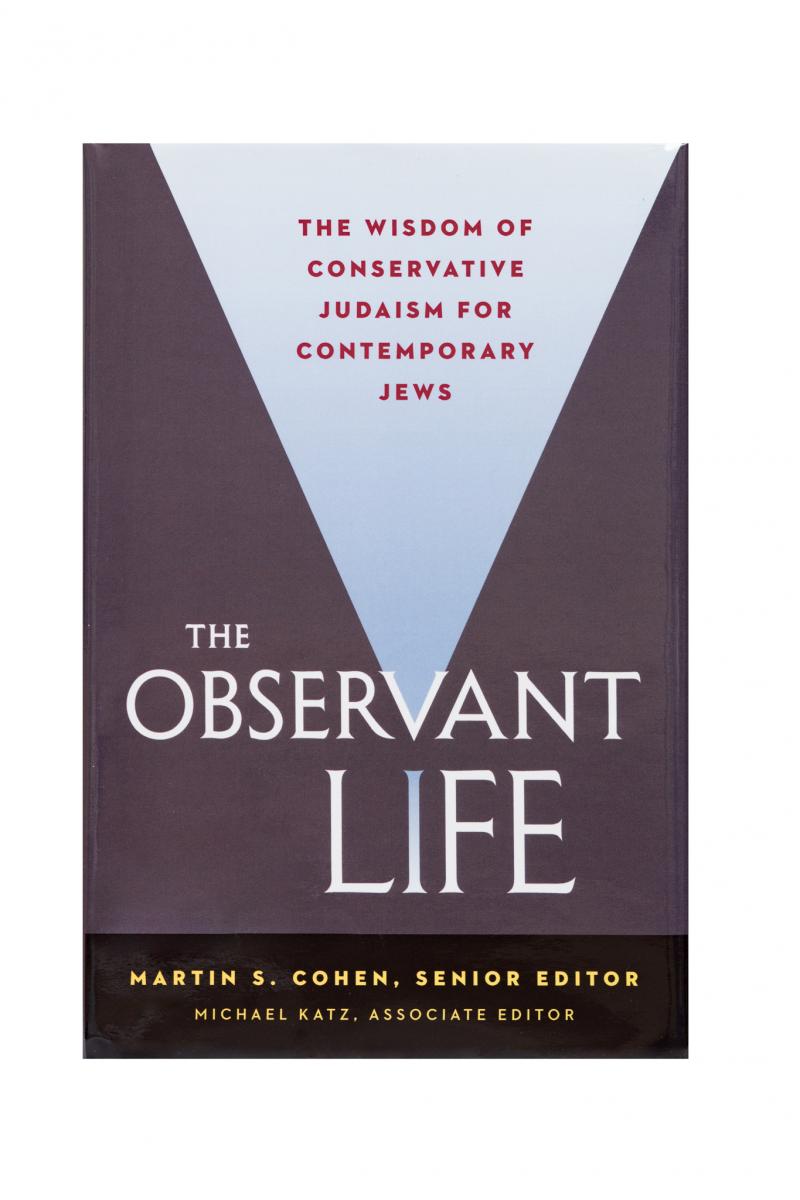
Adapted with permission from The Observant Life.