Skip to content
Holidays
Candle Lighting Times
Shabbat
Tisha B’av
Tu B'av
Juneteenth (US)
More Holidays >>
Every Day
Blessings
Daily Living
Home
Kashrut
Prayer
Ritual and Prayer Items
Spirituality
Tzedakah
Living
Climate and Environment
Health
Jewish Identity and Pride
LGBTQ+
Lifecycles
Social Justice
Travel
Learning
Tanakh
Torah (The Five Books)
Neviim (Prophets)
Ketuvim (Writings)
Tanakh Yomi
Conservative Judaism
Halakhah
Inclusion
Mitzvot
Community
Make Connections
EJ Writers Fellowship
JTS Senior Sermons
Ziegler School Senior Sermons
Ask a Rabbi
Mini-Shop
About
About Us
Our Team
Authors
Pitch a Piece
Feedback
Exploring Judaism Blog
Search
Donate
Search
Category: Preparing for Rosh Hashanah
תכלה שנה וקללותיה – תחל שנה וברכותיה
ובאמת, לצד האסונות שידענו לאורך אלפי שנות קיומנו, ידענו גם לקום, להתאחד ולהתחזק מתוך השבר. וכך יהיה גם הפעם.
Rabbi Nathalie Lastreger
September 23, 2024
High Holidays
Holidays
End the Year and Its Curses – Begin the Year with Its Blessings
Despite the disasters we have faced, we have known how to rise, unite, and grow stronger from the fractures.
Rabbi Nathalie Lastreger
September 23, 2024
High Holidays
Holidays
Social Justice Commission High Holiday Reader 5785
Our tradition teaches: the sound of the shofar can literally break down the walls, both physical and spiritual. It can shatter complacency and indifference.
Social Justice Commission
September 23, 2024
High Holidays
Holidays
High Holiday Liturgy: Making Meaning from the Metaphors for God
By understanding the nuance of Divine justice, we are given a powerful model for healthier relationships in the human realm.
Rabbi Amalya Volz
September 18, 2024
High Holidays
Holidays
How to Prevent High Holiday Burnout
The delicate balancing act of celebrating and observing the High Holidays can be mixed with a bit of overwhelm. Here's what you can do.
Rabbi Amy Grossblatt Pessah
September 17, 2024
High Holidays
Holidays
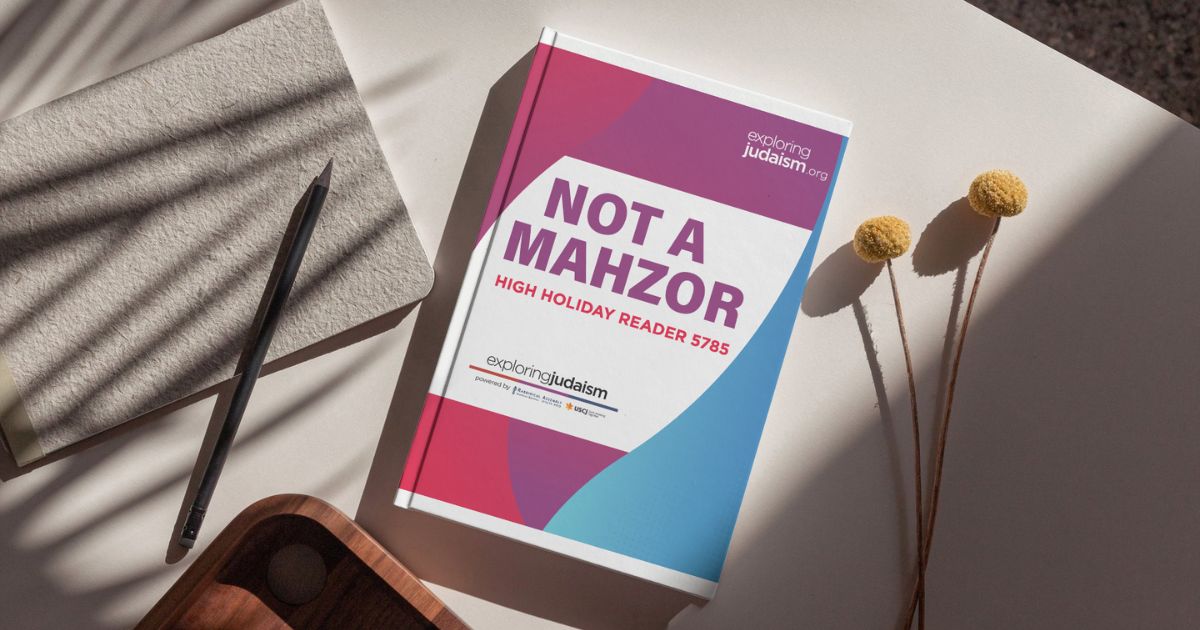
High Holiday Reader 5785: Not A Mahzor
Exploring Judaism's 2024 (5785) High Holiday Reader, Not A Machzor, includes essays to inspire a meaningful Holiday season.
Exploring Judaism
September 13, 2024
High Holidays
Holidays
How To Get Religious Accommodations At Work
Want to know your rights as a Jew in the workplace? Need religious accommodations? Find out what your rights are and how to exercise them.
Andrew J. Horowitz, Partner at Obermayer Rebmann Maxwell & Hippel LLP
September 9, 2024
Elul
Government
Netzach and Hod (Rosh Hashanah)
Rabbi Friedson explains the middot—soul traits—of netzach and hod and relates the required tenacity and glory to this time of year.
Rabbi Sarah Freidson
November 5, 2023
High Holidays
Holidays
When the Holidays Are Hard
Everyone celebrates Rosh Hashanah differently, but sometimes, the holidays are hard. What can we do when this is true?
Rabbi Lauren Tuchman
September 11, 2023
Elul
Holidays
Celebrating the High Holy Days From Home
Celebrating the high holy days from home gives us ample opportunity to bring the sacred even further into our lives.
Rabbi Sydni Adler Rubinstein
August 13, 2023
Elul
High Holidays
What to Read to Prepare for the High Holidays this Year
Rabbi Mordechai Rackover recommends these reads to help you prepare for the themes, liturgy, and spirit of the High Holidays.
Rabbi Mordechai Rackover
September 16, 2022
Elul
High Holidays
My Bangin’ Rosh Hashanah Seder
Emily Jaeger explains to us: What is the Rosh Hashanah seder, how do we perform it, and why you might consider doing one too.
Emily Jaeger
September 15, 2022
Food
High Holidays
Being Called by God
When we say hineni to ourselves and our lives have a spiritual center, our existence will be more meaningful, and we'll live a more purposeful ...
Rabbi Mark Zimmerman
September 15, 2022
Elul
High Holidays
Customs before Rosh Hashanah
There are customs in order to prepare for Rosh Hashanah, including Selichot, physical changes in the synagogue, and immersing in the mikveh.
The Observant Life (Book)
,
Rabbi Alan Lucas
August 30, 2022
High Holidays
Holidays
Living With No Regrets
While introspection is healthy, too much regret can discourage us from embracing our unchangeable past and our openness to future choices.
Rabbi Jacob Blumenthal
August 25, 2022
Elul
High Holidays
(Not) Announcing Rosh Hashanah
On Rosh Hashanah, we do not recite the traditional blessings announcing a new month for a variety of different reasons.
The Observant Life (Book)
,
Rabbi Alan Lucas
August 21, 2022
Elul
High Holidays