A Talmudic Midrash obligates prayer three times a day, instituted in honor of our three patriarchs, Abraham, Isaac and Jacob.

A Talmudic Midrash obligates prayer three times a day, instituted in honor of our three patriarchs, Abraham, Isaac and Jacob.
The Amidah is considered the central part of daily Jewish prayer, with minor variations in the text based on time of day, year and season.
Our prayers are almost always a mixture of both keva (oft-recited text) and kavanah (deeper layers of meaning).

Changes in liturgy are born out of changes in the theological and historical life of a people, both the individual and the community.
Movement acts as part of prayer, orchestrated in traditional Jewish settings, thus putting us in touch with the ebb and flow of the liturgy.
An individual, Rabbi, Cantor, or volunteer, skilled in singing and well-versed in Torah learning and liturgy, is appointed to lead prayers.
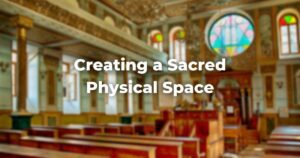
Halakhah demands that we invoke God’s name in prayer only in settings that are worthy of the sacred enterprise of prayer.
Tefillah is more than the sum of its parts and encompasses far more than the obligation to recite certain specific daily prayers.
Jews are permitted to pray in any language and thus making our liturgy a link to Jews all around the world.
By the use of set prayers, are we ipso facto guaranteeing that some will be obliged to recite words they do not find true or meaningful?