Jews are permitted to pray in any language and thus making our liturgy a link to Jews all around the world.

Jews are permitted to pray in any language and thus making our liturgy a link to Jews all around the world.
By the use of set prayers, are we ipso facto guaranteeing that some will be obliged to recite words they do not find true or meaningful?

We hear from God through our participation in liturgical prayer, and also through the study of religious texts.
The Shema is the declaration of God’s uniqueness and unity that the Torah commands us to recite twice daily.
The Evening Service, called Ma’ariv (also called Arvit or spelled Maariv), is slightly longer than the Afternoon Service.
The Afternoon Service, called Minḥah (or Mincha), is much shorter than the Morning Service and has no unique components.

Every day of the year, the Morning Service follows some variation of the order of the same Sharcharit prayers.

The prayers at the very beginning of the morning service help us to start our day with intention and gratitude.

There is a wide range of specific customs related to the issue of covering the head, including what to cover it with.
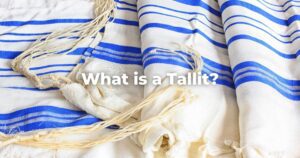
The tassels of the Tallit, called tzitzit (or tzitzis) in Hebrew, are explicitly intended to serve as a reminder of God’s commandments.