The TorahRefers to the first five books of the Hebrew Bible, the Tanakh, also called the Five Books of Moses, Pentateuch or the Hebrew equivalent, Humash. This is also called the Written Torah. The term may also refer to teachings that expound on Jewish tradition. Read more advises the young to “Remember the days of old; reflect upon the years of other generations” (Deuteronomy 32:7). As a writer of historical topics, this piece of wisdom is essential when starting research. But now, these words have a different significance for me.
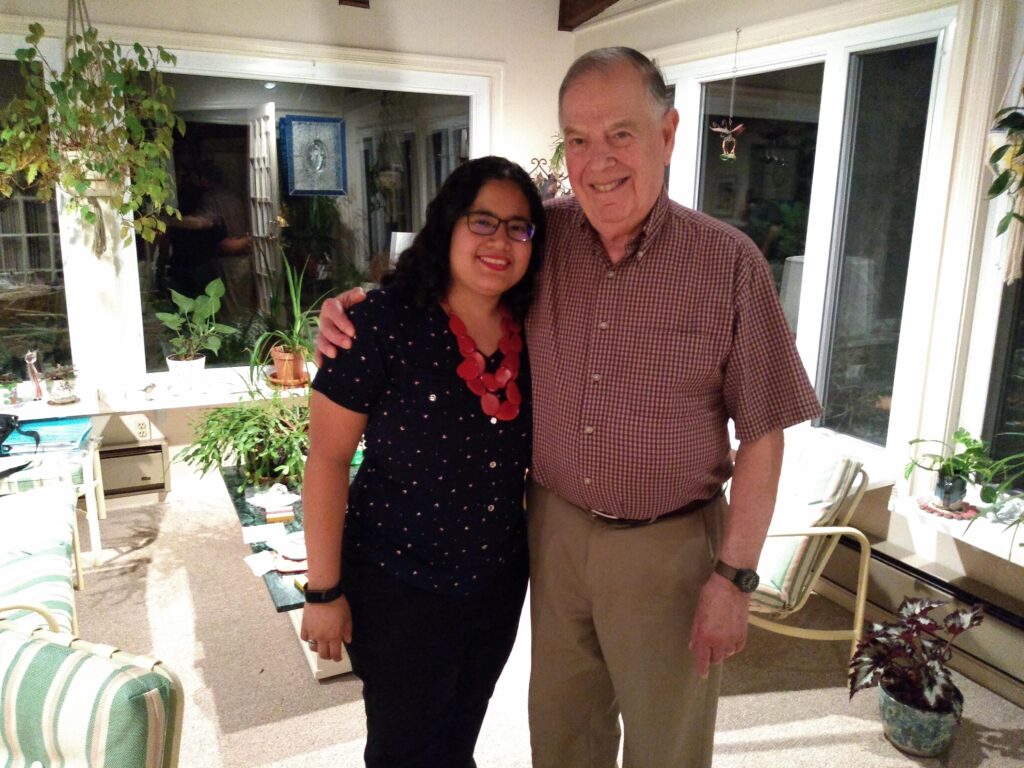
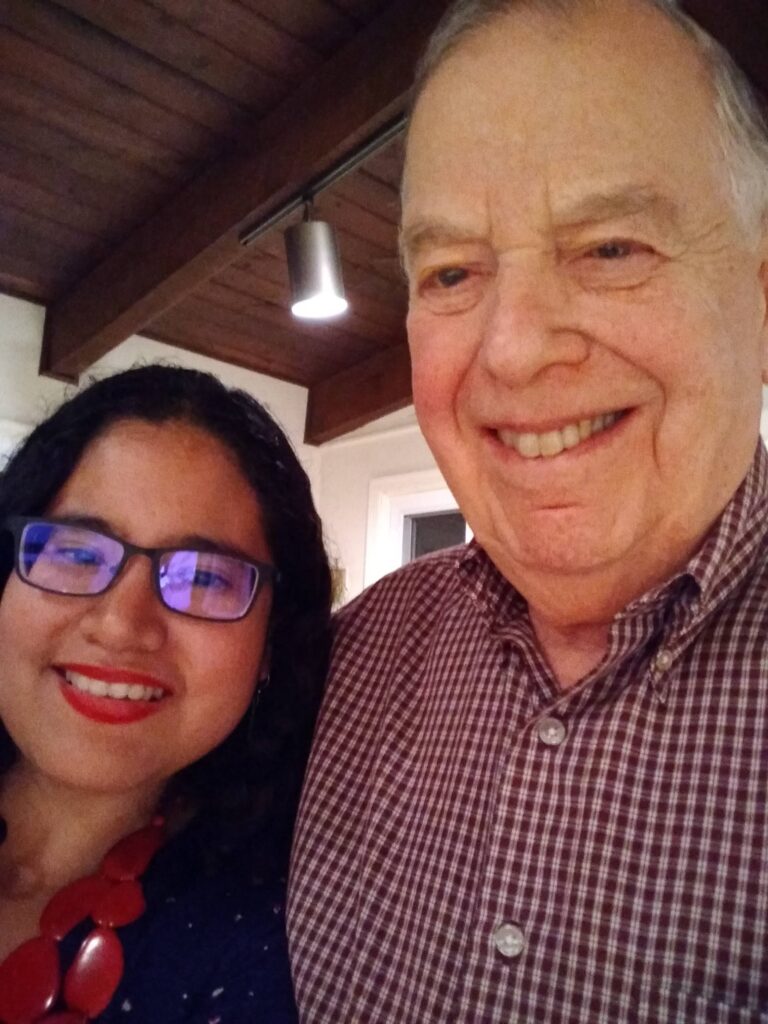
Pete Philipps was born in Germany about a year before Hitler became chancellor. Thanks to the foresight of his parents, Pete and his family escaped the worst of the Holocaust. They fled to Czechoslovakia, Italy, and Ecuador. Eventually, they settled in New York City by 1941. Unfortunately, Pete lost many relatives in the Holocaust, like his beloved grandmother, a victim of Sobibor. After retiring from the journalism industry, Pete volunteered at the United States Holocaust Memorial Museum for a decade. This was a way of paying tribute to all victims of his generation.
I was born sixty years after Pete in Houston, Texas, to an Ecuadorian family. My family had recently immigrated for my father’s job. Unlike Pete, I was not raised Jewish, but Evangelical Christian. In 2018, I wrote a novel for young readers titled The Center of the Earth. Pete was one of the eight people I interviewed for my research. I wanted to know everything about his family’s emigration to Ecuador.
But what began as historical research for my book soon turned into something else. The more we communicated, the more fascinated I became with Judaism and the teachings passed down through generations. I was intrigued that Judaism encourages asking questions and pursuing justice. Pete taught me about tikkun olam, the idea of repairing the world for everyone who shares our planet. Finally, in March 2024, after years of study, my husband and I converted through the Conservative Movement. The first person I called when I left the mikvah center was Pete, and he cried tears of happiness. It is unbelievable to think Pete could have held me when I was a baby, and somehow, despite our generational gap, we became close friends.
During our most recent conversation, Pete said he was raised in the Conservative Movement. His father was observant, but his mother was not, so Conservative Judaism provided a compromise. It was traditional, yet not as traditional as Orthodox Judaism. Pete attended Congregation Beth Hillel in Washington Heights, New York. German-Jewish refugees built the synagogue in 1939 after fleeing the Nazi regime. They wanted to establish a Jewish home in New York for future generations.
The synagogue was inside a rented venue called Paramount Hall on 183rd Street. Pete remembers walking several blocks with his father on Shabbat to attend services. He described having a simple celebration when he became Bar Mitzvah in 1944. Pete did not appreciate the gender-segregated seating during services, finding it too strict. This led him to Reform Judaism in his adult years. However, he respects how Conservative Judaism provides the right touch of tradition and modernism.
I am a member of Congregation Beth Yeshurun, the largest Conservative synagogue in the United States. As Pete shared his memories of synagogue, I was surprised to hear how different his experiences were from mine. I attend services weekly, and I sit next to my husband. We both wear a kippah and a tallit. We have female cantors, a female rabbi, and a band that plays the melodies to our prayers. Since my congregation is so large, there is a bar or bat mitzvah nearly every week. Celebrations range from modest to extravagant, depending on the family’s preference.
This past summer, my husband and I completed our adult b’nei mitzvah. We led services together, including chanting from the Torah. In spite of his hesitations about the movement in his younger days, Pete is delighted to know that my husband and I found our place in Conservative Judaism and to hear how it has evolved throughout the generations into a more egalitarian environment.
Occasionally, I attend services at other synagogues, usually Reform, to catch up with friends. But I feel most at home in Conservative Judaism, especially at Congregation Beth Yeshurun. Conversion steps at other synagogues in my area were shorter and “easier” to complete, but I still wanted to join the conservative branch. I desired to practice more traditions to feel closer to Judaism. I had to learn Hebrew, the kosher laws, how to celebrate the holidays, and many other topics. Yet none of these lessons ever felt tedious.
From the beginning of my conversion to my beit din (final conversion meeting with the rabbinical court), Pete was my mentor. I will never forget his guidance and enthusiasm for my journey. Even though I do not have Jewish relatives, Pete became my honorary Jewish grandparent. He is my “Opa,” the German word for grandfather. Like my conversion process, my book publication process was very long. But if I could go back in time, I would not change anything. Both processes were worth the years and effort because of the wonderful relationships I built. The passion Pete and the others had for their religion and heritage was my driving force into my perfect match of Conservative Judaism.
“I remember the day I converted,” I said to Pete during our last phone call. “And you were ecstatic to hear I was finally a Jew. I had never heard you with such a joyful voice. Can you tell me why you were so thrilled?”
“Because you joined my tribe,” he responded. “And I am so happy to have you.”
I asked him what advice he has for a “new Jew” like me. I am only a year and a half into my conversion. Pete answered, “Adhere to Jewish values, ethics, and morality, but most of all, be a good person, just as you already are.”
To echo Pete’s words, I am thrilled to be part of the Jewish family, including being a descendant of those from “the days of old.” The second half of Deuteronomy 32:7 is “Ask your father, and he will tell you; your elders, and they will inform you.” Thanks to the teachings and love of the older generation, I am well prepared to live the rest of my life as an elated and observant Conservative Jew.
This essay was submitted as part of Exploring Judaism’s L’Dor V’Dor Essay Contest. To learn more, or submit your own essay, go here.