I was born in the United States, but my parents left Russia in the 1990s. Like many Jews before them, they could not bring everything with them. For Jews, it was always hard to preserve family heirlooms.
For example, a bit of my dad’s side of the family was from Belarus. When pogroms started, nobody had time to take anything with them; that’s how many family heirlooms were lost. In other cases, they would have to sell the heirlooms for money or for food or for housing.
Also, when my parents were leaving the country, they weren’t allowed to take stuff with them that was considered antique or had some other value. For example, my great-grandpa had a pocket watch that was gifted to him by my grandpa and his brother, but when my grandpa tried to take it out of the country, he was stopped because it was considered to have antique value. My mom had a golden shelf clock, but it also wasn’t allowed out of the country for the same reason. My mom says the clock also had sentimental value because each day before going to bed, her mom told her she wasn’t alone—because there was a gnome living in the clock.
What my family was able to save were high awards for their accomplishments. My grandpa got a medal for being the valedictorian in his school. My great-grandpa got one of the two highest awards you can get in Russia—the Order of Lenin. Also, both my grandparents from my mom’s side received awards. My grandpa for his inventions in science, and my grandma for her multiple ethnographical indexes. We still have some of these in our family safe today.
Some people may ask, “What impact does that have on you?” Well, we don’t have the lost objects anymore, but we have the stories about them. If it weren’t for those stories, we would have never known to whom that pocket watch belonged or to whom the shelf clock belonged.
Additionally, the stories reveal what those people were like, what they did, how they acted, and what I have in common with them. This is important because these stories and their “owners” are part of us and our story. We have traditions that are not always easy to understand. For example, we have a calendar where it is the year 5786. Also in Russian Jewish tradition, people put photos of the deceased on the gravestone. Other cultures don’t usually do that. It’s small stuff like this that usually causes bullying. It’s not like I was ever bullied in school for being a Jew; I was just sometimes teased for these interesting customs. So even though we lost all this stuff, we still have stories.
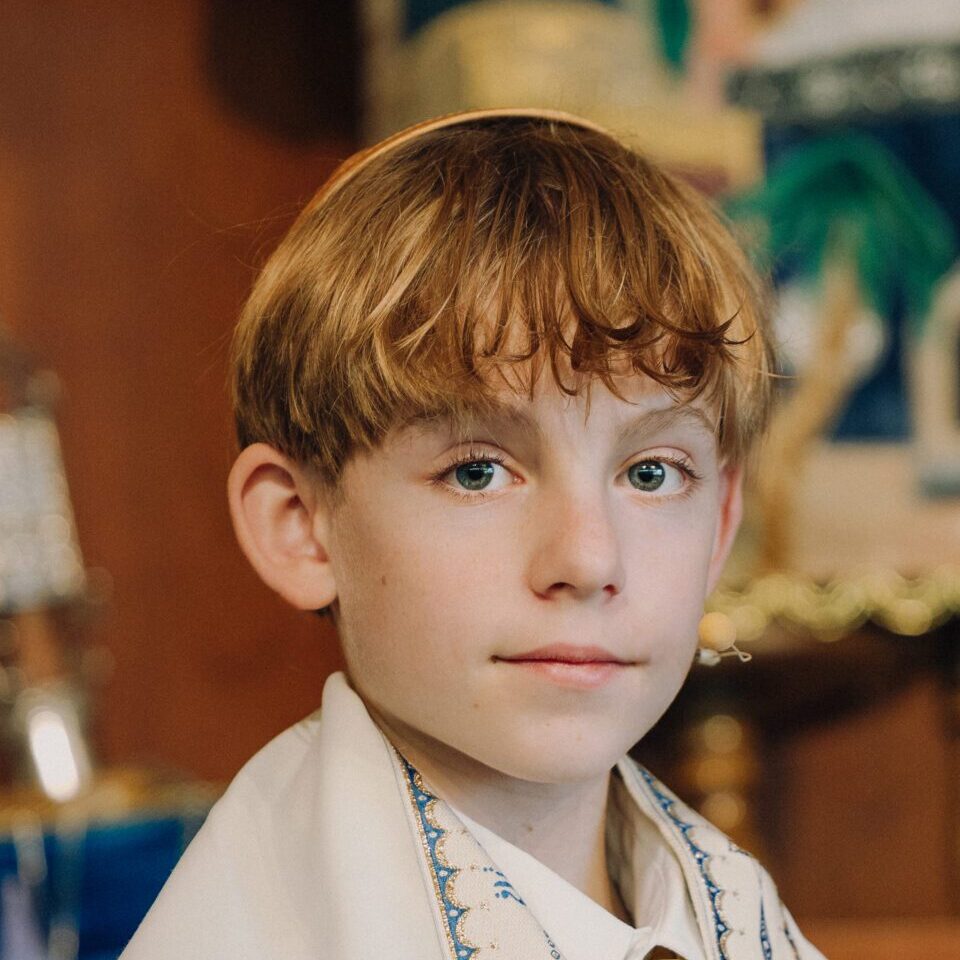
My bar mitzvah was just a few weeks ago. My project was to interview Holocaust Survivors and then do a little video on what I learned. The Holocaust created a gap in the history of Jewish families—so many stories were destroyed. Some may ask, so why do stories even matter? But stories prove that the Holocaust existed; they show the suffering that the Nazis caused. What would it be like to lose our stories? The goal of my project is to show people who don’t know that the Holocaust was real what happened and how deep it is, and for those who didn’t believe it happened, to tilt them in the direction of thinking that it did. What is worth noting is that I interviewed more than one survivor, but some still feel unsafe sharing their stories publicly.
My bar mitzvah parasha was Chayei Sarah. Since Abraham was the first Jew, he sets an example, and now we pass it down. In the course of thousands of years of Jewish history, Jewish people were able to preserve their major traditions but not necessarily personal artifacts.
Some may ask again, okay, maybe stories do matter, but what does that have to do with you? Well, it is about my legacy, my background; those stories are part of it. My bar mitzvah was the first one in many generations. Judaism wasn’t allowed in the Soviet Union, and so we don’t even know when the last one was. I had my bar mitzvah at Oheb Shalom, a Conservative synagogue. The service felt accessible to my family and school friends because the rabbi and cantor explained things for our guests as we went. My younger brother and I attend the Zeman Religious School, and he was able to lead the Shema, which he just learned to read in Hebrew. We aren’t Orthodox as a family, and we also wanted something that felt really Jewish and like what our ancestors or people all over the world would do for a bar mitzvah.
What will my great-great-grandkids know about me? They will know what they heard from stories. They will know that I was the first bar mitzvah in the family and that we had it at a Conservative synagogue, that my rabbi and cantor were women, and that I met actual Holocaust survivors and shared their stories. That is why stories are so important; they are like a living memory of that person, if they are told well. What I would like my grandkids to know about me is that I was a good person (or will be, hopefully). If I changed the world around me, I would like them to know my legacy.
Becoming a bar mitzvah meant a lot to me because it’s like I’m now part of this really long chain of Jewish history. Just like Abraham wanted Isaac to keep the traditions going, my parents and grandparents have passed down stories and traditions to me. Now it’s my turn to learn them and live them. Someday, I’ll be the one telling the stories and passing them down. It feels like a big responsibility, but also exciting, because it means I get to be part of keeping our story alive.
This essay was submitted as part of Exploring Judaism’s L’Dor V’Dor Essay Contest. To learn more, or submit your own essay, go here.