
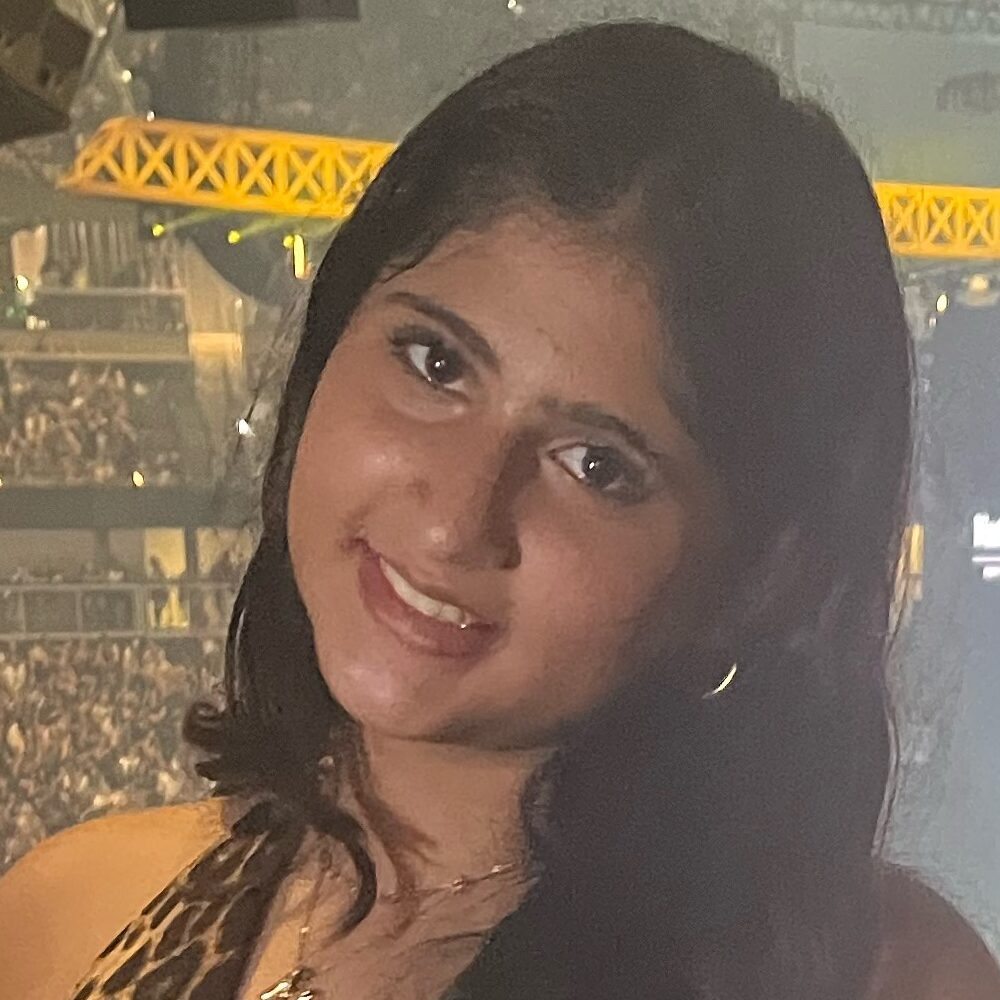
All her life, my Tata, my maternal grandmother, grew up in a country where Judaism was the main religion. It was a lifestyle. Her Conservative Jewish journey did not start until she stepped foot into Congregation Orveh Shalom in Atlanta, Georgia.
My Tata was born in Israel in 1956. Coming from a Buchari-Iraqi family, she often had a different experience than what we hear in the Ashkenazi-dominated United States. She recalls that every Friday, the men of the household would go to synagogue. They would keep kosher, not eating meat until six hours after eating dairy.
In Israel at the time, Judaism was practiced in a more traditional way without thinking of the strings attached to it. For example, her father would force the children to sit down and do TorahRefers to the first five books of the Hebrew Bible, the Tanakh, also called the Five Books of Moses, Pentateuch or the Hebrew equivalent, Humash. This is also called the Written Torah. The term may also refer to teachings that expound on Jewish tradition. Read more study, but on Shabbat, they would pile into their tiny car and drive down to Eilat or the north for a trip.
However, things changed when my Tata came to America. Baba, my grandpa, took her to a Mizrahi-Conservative synagogue. She remembers entering there for the first time, and what took her by shock, were the men and the women sat together! She was in awe because she saw people breaking shomer negia (the practice of not touching members of the opposite gender), the Rabbi hugging women and men. This confusion consumed her.
She remembers the first time she sat with her husband in synagogue. The feeling of solid wooden seats, the beautiful architecture perfectly built to the last detail, and the air filled voices of men and women singing the same prayers. Over time, my Tata had gotten used to this type of Judaism by opening her mind to what went against what she grew up with. She says it was nice to be able to sit with her husband and family, my mother and her two brothers.
“I believe it is important to believe in God,” she notes, “no matter how religious you are.”
Her most cherished moment is when she saw me, her first granddaughter, go up and read Torah. At first she was on edge about this idea because even at Orveh Shalom, women were still not allowed to read Torah. But my Tata opened her heart, just like she did with Conservative Judaism.
My grandmother grew up in a predominantly Ashkenazi-dominant neighborhood. She was often looked down upon because of the stereotype that Mizrahi Jews aren’t intelligent, or are less civil, than white, European Jews. When she came to the United States, she went to a Sefardic synagogue, but still, she was a minority in the Jewish community. It was hard to adjust to this. She remembers going to places with white Jewish women and feeling judged because she had different traditions and cultures. She was ashamed because instead of the typical Jewish meal of orange juice and bagels with cream cheese for break-the-fast after Yom Kippur, she only knew of Kube and tea. She could not share the same way of life and traditions with her neighbors. During Passover, she could not invite Ashkenazi Jews because they would not eat rice like her.
Despite these differences, the dominant Ashkenazi culture started to accept some Sefardic traditions. For example, I read Sefardic trope in my Ashkenazi Conservative synagogue. I remember members of the community approaching me after and saying, “Wow! I have never been exposed to something like that,” or “I have never heard the trope chanted like that.”
Over the years, my grandmother kept an open mind and heart. The dominant community could do the same because they had never before been exposed to the Sefardic traditions. Over time, the two groups started to accept one another, and this was because of the Conservative movement and its openness.
This essay was submitted as part of Exploring Judaism’s L’Dor V’Dor Essay Contest. To learn more, or submit your own essay, go here.